Products / EVA-X I1
Air-launched ISR / tracking / communications UAV

EVA-X I1

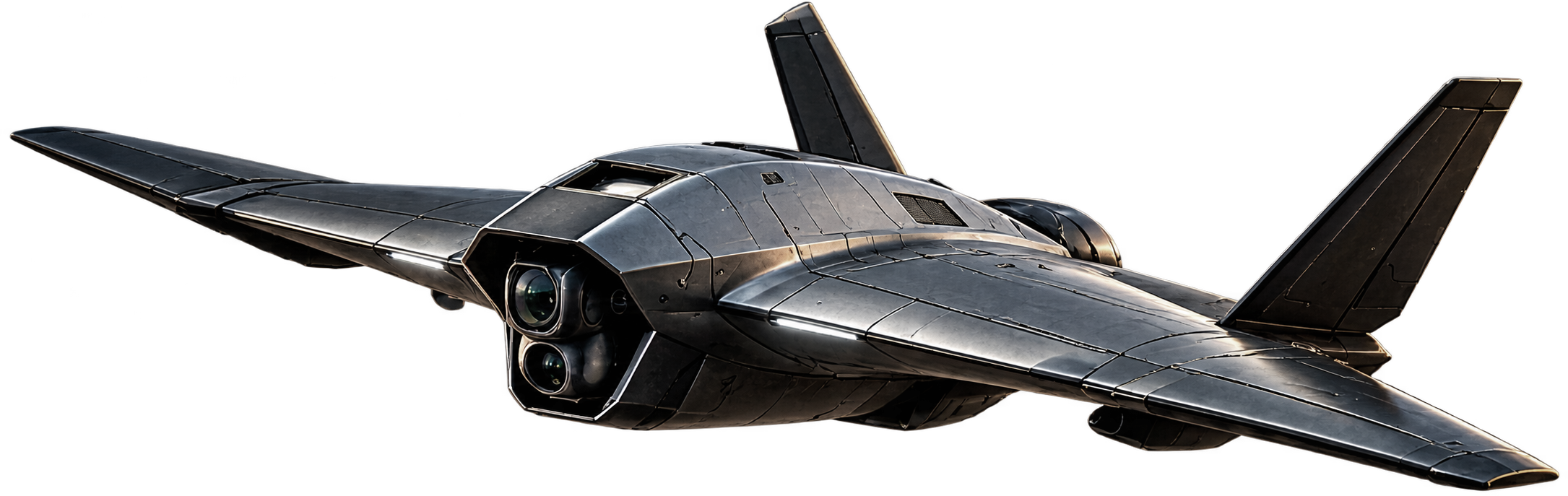
A compact, optionally armed, electrically powered fixed-wing aircraft designed to carry inside the EVA-X MINI six-position payload bay — built for observation, tracking, mapping, and communications-relay missions.

Weapon payload, kinetic effect, explosive system, or weapon-delivery interface is optional in this design. EVA-X I1 is an ISR, tracking, and communications aircraft.
System concept

Small enough to carry six. Capable enough to matter.

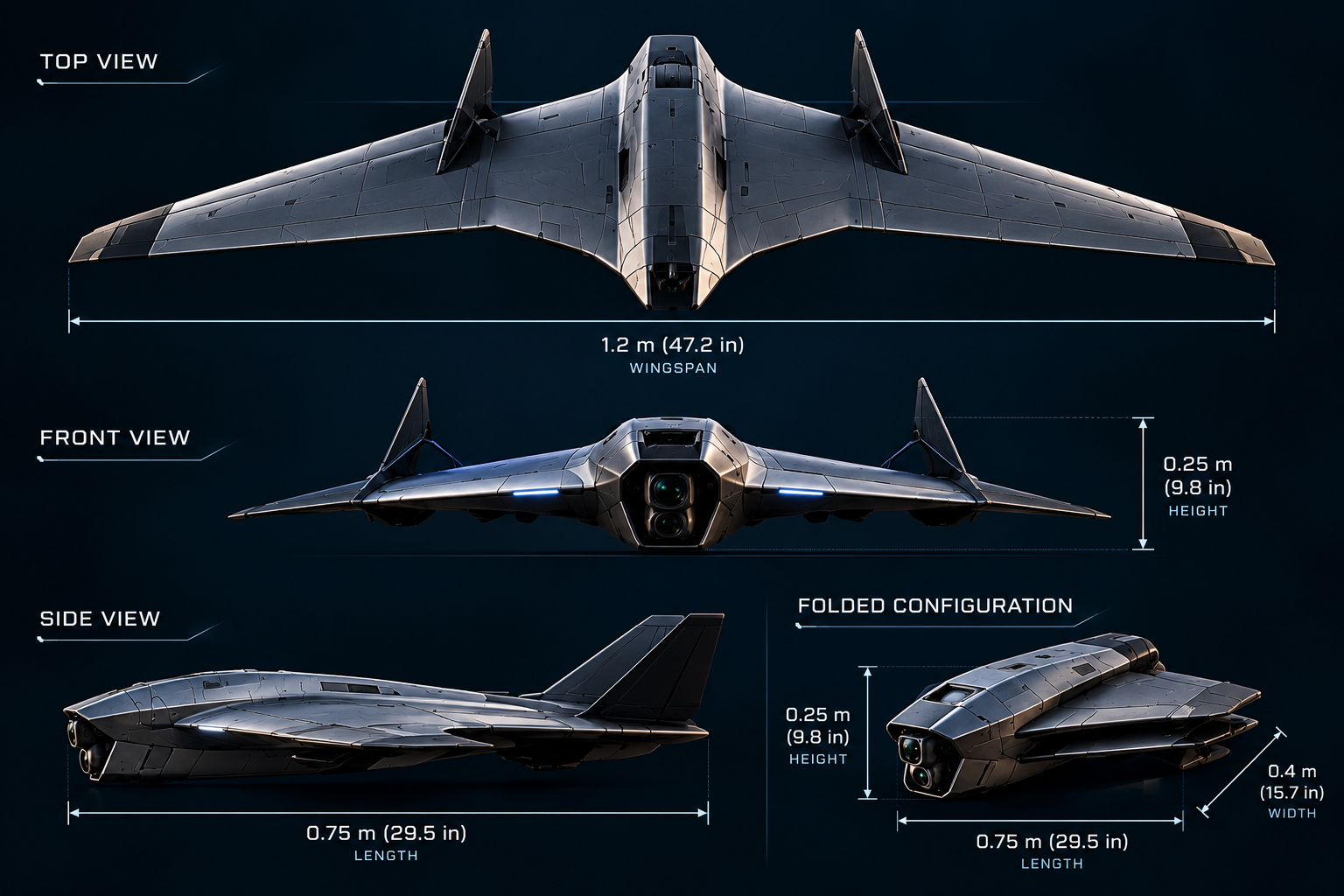
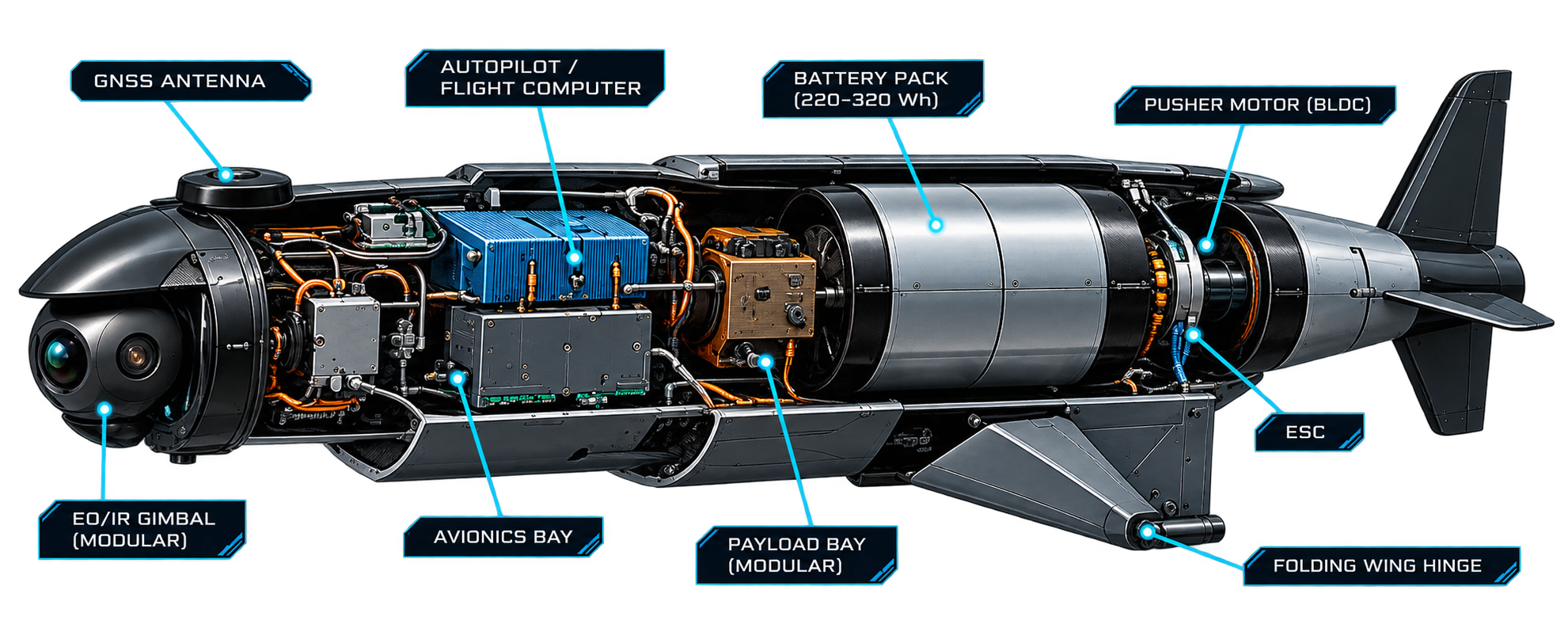
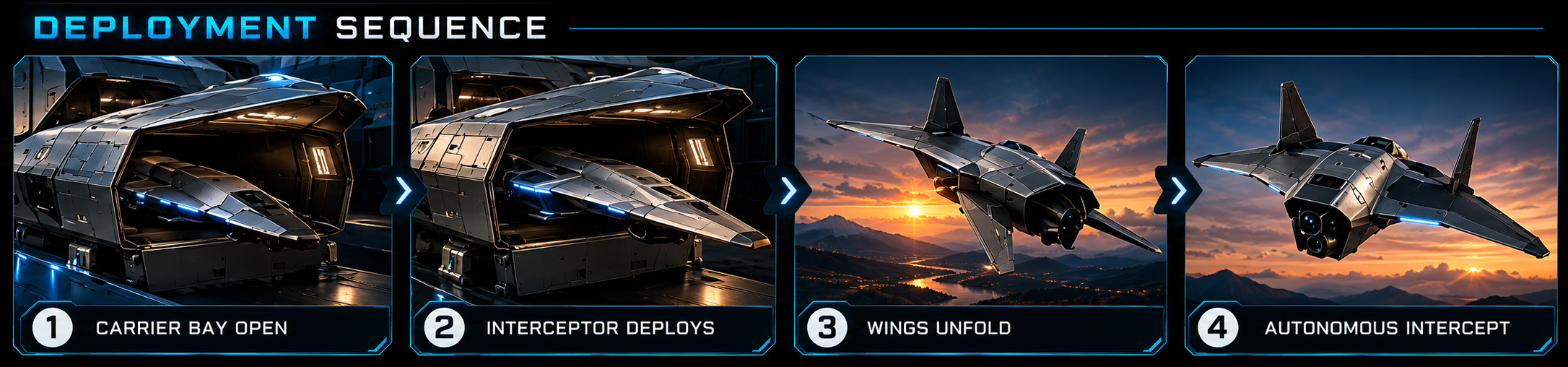
EVA-X I1 is a compact, electrically powered fixed-wing UAV designed for carriage inside the EVA-X MINI six-position payload bay. It is intended for observation, tracking, mapping, and communications-relay missions. The common air vehicle uses folding wings, a pusher propeller, a modular sensor nose, GNSS/INS navigation, and a digital command/data link.

≤1.6 lb

Maximum mass

28 in

Deployed wingspan

6

Per EVA-X MINI rack
Mission configurations

One airframe. Three mission roles.

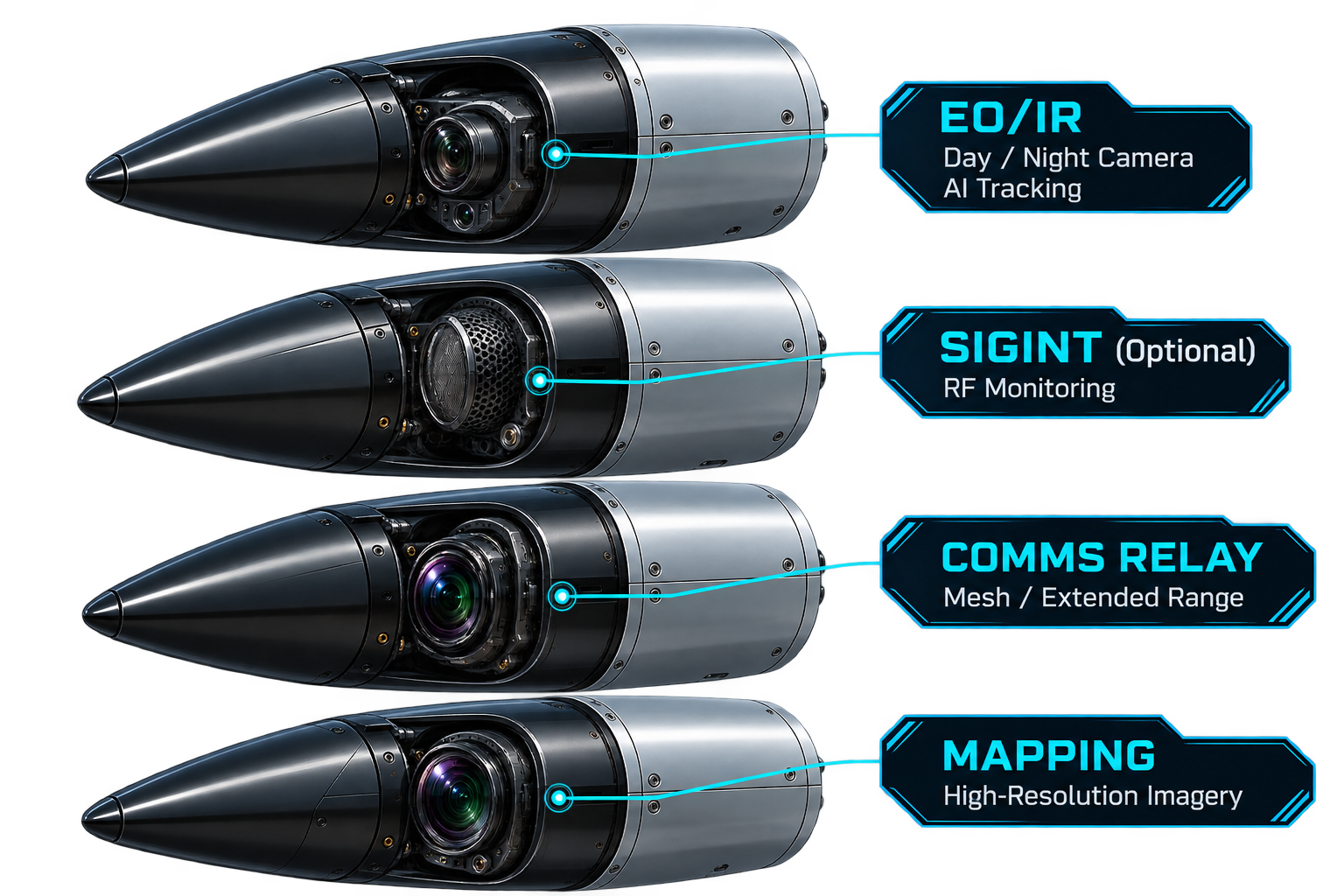
The common air vehicle carries a different modular nose and mission software profile depending on the assigned role.
I1-EO/IR
Observation / Tracking
Stabilized day/night observation and tracking payload with real-time video and data.
I1-LR
Long-Range Recon
Endurance/reconnaissance configuration with larger energy allocation and a mapping payload.
I1-R
Communications Relay
Communications-relay configuration with a digital networking payload.
Common air vehicle specifications

One design baseline across all three roles.

Maximum mass
≤1.6 lb / 0.73 kg
Deployed wingspan
28 in / 711 mm target
Overall length
17 in / 432 mm target
Folded width
≤3.8 in / 97 mm target
Wing area
~2.05 ft² / 0.190 m² preliminary
Wing loading
~0.78 lb/ft² at 1.6 lb
Propulsion
Electric pusher
Battery
220–320 Wh, mission dependent
Endurance objective
45–75 min, mission dependent
Cruise target
45–60 mph
Max-speed objective
80–100 mph; requires validation
Recovery
Belly landing, parachute, or expendable
Preliminary mass budget

An open engineering problem, not a solved one.

The first-pass mass budget intentionally exposes a closure issue rather than hiding it.
Not yet closed
The shown allocation totals ~800 g against a 730 g goal — the design must remove ~70 g or reduce battery/payload mass. A 220–320 Wh battery is unlikely to fit a 730 g total-aircraft target using conventional cells; battery energy, endurance, and total mass require a detailed cell-level trade study before the 1.6 lb requirement can be frozen.
Component
Target
Composite airframe / wing / tail
~180 g
Battery (baseline configuration)
~230 g
Motor / ESC / propeller
~85 g
Flight computer / GNSS / INS
~55 g
C2 / telemetry
~45 g
Payload sensor / relay module
~80 g
Servos / actuators / wiring
~45 g
Wing-fold / locking hardware
~40 g
Margin
~40 g
Total (shown allocation)
~800 g vs. 730 g goal
Aerodynamic baseline

Built for loiter and recovery, not top speed.

The 28 in span / ~2.05 ft² preliminary wing gives very low wing loading at the stated mass. The aerodynamic design prioritizes predictable deployment, low-speed stability, efficient loiter, and robust autonomous recovery.
Target cruise L/D
≤1.6 lb / 0.73 kg
Stall-speed objective
~20–30 mph, CLmax/mass dependent
Cruise power objective
~60–100 W preliminary
Maximum electrical power
~250–350 W preliminary
Service ceiling objective
Up to 12,000 ft; requires validation
Turn-radius objective
Mission dependent; not frozen
Electrical / avionics architecture

U.S./allied autopilot, encrypted link, onboard autonomy.

Flight controller
Compact U.S./allied autopilot with GNSS/INS
Navigation
GNSS + inertial; optional visual navigation
C2
Encrypted digital command/telemetry link
Payload data
Digital video/data interface
Power
Single propulsion battery, regulated avionics rails
Autonomy
Waypoint nav, search patterns, tracking, geofence, return/divert
Six-I1 payload magazine

A protected magazine, not an exposed payload rack.

Six I1 aircraft ride in a 2-column × 3-vertical-level magazine (470 × 255 × 380 mm), each ≤1.40 lb for ≤8.4 lb total, plus a ~1.2 lb rack.

Rack quantity
6 aircraft
Folded envelope
~17 in long × ≤3.8 in wide; height TBD
Retention
Positive mechanical latch
Electrical interface
Preflight health / charging / maintenance
Release verification
Position/status sensing
Carrier compatibility
EVA-X MINI D, H2-C, and H2-L common bay
Detailed release loads and separation envelopes require physical testing.
Modular nose

Quick-swap payload options.

The modular nose design allows the same airframe to be reconfigured for the assigned mission without a different aircraft.
Verification program

What has to be proven before this is frozen.

Release status

Stated exactly as the engineering team wrote it.

Revision A Status
Conceptual optionally armed ISR/communications air vehicle, released for mass closure, aerodynamic design, component sourcing, and CAD development. Performance values remain engineering objectives until validated.
Weapon payload, kinetic effect, explosive system, or weapon-delivery interface is optional in this design.
Small aircraft. A bigger tomorrow.

See how I1 fits inside the carrier.

I1 rides six-to-a-rack inside the EVA-X MINI and EVA-X GHOST payload bay — request the full Rev A specification to review planning estimates, open engineering items, and the validation path.